
News
August 12, 2026
Our Python framework for cell-free DNA fragmentomics pyfraglib is now available on bioRxiv
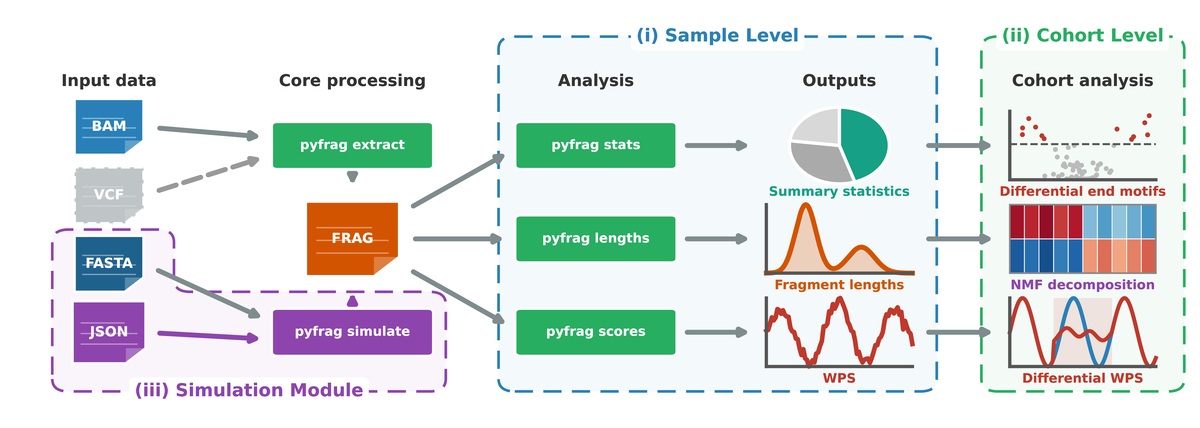
pyfraglib provides an integrated framework for systematic extraction and analysis of cfDNA fragmentomic features, including fragment size distributions, end-motif profiles, genomic fragmentation patterns, and cohort-level statistical analyses, alongside an in silico fragment simulation module.
By combining these capabilities within a single, modular and reproducible framework, pyfraglib facilitates standardized cfDNA fragmentomics workflows and supports method development, benchmarking, and biological investigation across diverse datasets.
pyfraglib´s available for use on GitHub.
June 19, 2026
Successful Summer Retreat in Jünkerath

This year's summer lab retreat brought us again to the beautiful Glaadter Hütte in Jünkerath.
We used the inspiring atmosphere of the Eifel to continue our successful hackathon event from last winter, developing new innovative ideas, prototyping new computational tools, and tackling challenging scientific questions.
Beyond the coding and grant writing sessions, there was plenty of time for scientific discussions, networking, and some outdoor group activities.
June 18, 2026
CoPhasing now available on bioRxiv
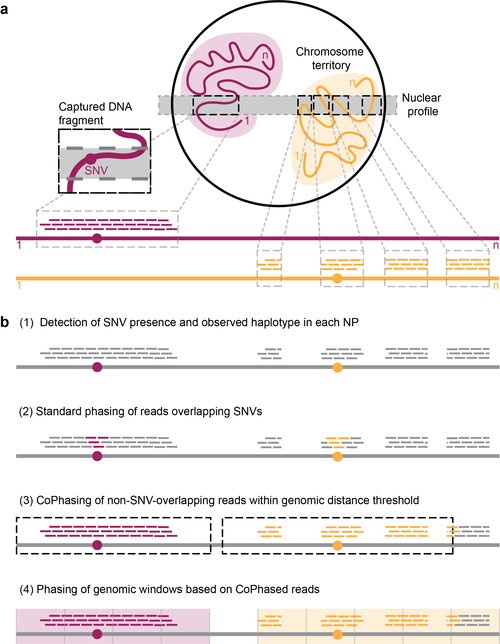
CoPhasing enables phasing of Genome Architecture Mapping (GAM) data, resolving haplotype-specific 3D chromatin structures independent of variant density. This work is a collaborative project between our group and Ana Pombo´s team (MDC Berlin / Johns Hopkins University, Baltimore).
Chromatin structure is key to the orchestration of gene regulation and resolving haplotype-specific chromatin conformation is essential for an improved understanding of the haplotype-specific regulatory landscapes of genomes, and their impact on health and disease. The sparse variant density in the human genome poses a challenge to direct phasing based on single-nucleotide variants.
CoPhasing leverages local haplotype information of GAM data to correctly assign sequencing reads to their haplotype of origin, even without overlapping heterozygous variants.
Applying CoPhasing to H1 hESCs reveals extensive structural heterogeneity between human homologous chromosomes, demonstrating the power of GAM CoPhasing to investigate allele-specific differences in 3D genome organization.
CoPhasing is available for use on GitHub.
March 16, 2026
SC-BIG our Bayesian model for somatic SNV calling in single-cell DNA sequencing is now available on bioRxiv

Despite technological advances, scDNA-seq remains noisy and is affected by amplification biases and allelic dropouts. SC-BIG leverages bulk sequencing data from a representative tumor sample to improve SNV detection by propagating uncertainty across multiple biological parameters, including copy number alterations, sample purity, and SNV clonality.
In a first step, the cancer cell fraction (CCF) of a SNV is jointly estimated from bulk and single-cell data. The CCF in turn then acts as a prior in the second inference step to calculate per-cell posterior probabilities for the presence of the SNV.
SC-BIG is available for use on GitHub.
March 6, 2026
Tom Kaufmann successfully defends his PhD

We are excited about Tom´s very successful defense of his PhD on March 6, 2026 at the Berlin Institute for Molecular Systems Biology, Max Delbrück Center for Molecular Medicine in the Helmholtz Association.
For his thesis “Computational models for deciphering the evolution of copy-number alterations in human cancers” he was granted a PhD with the highest distinction, summa cum laude from Humboldt University Berlin.
Tom is not only first author of MEDICC2 but also developer of SPICE, our new computational framework for reconstructing discrete evolutionary events underlying copy-number alterations and for quantifying their selection in cancer genomes.
Congratulations to Tom on this outstanding achievement and best wishes for the next exciting steps to come!
March 05, 2026
SPICE now available on bioRxiv
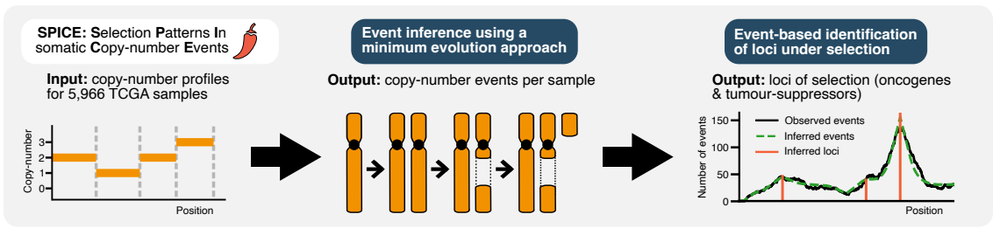
SPICE is a new computational framework that reconstructs the discrete evolutionary events underlying somatic copy-number alterations (SCNAs) and quantifies selection acting on them in cancer genomes.
SCNA profiles do not uniquely reveal the genomic events that produced them, limiting insight into how mutation and selection shape tumours. SPICE infers allele-specific copy-number events and models focal selection from first principles, using uniform breakpoint formation as a neutral baseline to detect locus-specific selective pressures.
Applied to 5,966 samples from The Cancer Genome Atlas, SPICE recovers known mutational processes, reveals shifts in event types before and after whole-genome duplication, and identifies 460 loci under selection. These loci are enriched for known oncogenes and tumour suppressors, recapitulate most reported regions, and uncover many novel candidates.
SPICE is available on GitHub.
January 12, 2026
Roland as a guest in the Born & Keppler podcast

Roland was invited to the Born & Keppler podcast hosted by Andreas Deptolla.
The two have discussed challenges and opportunities arising from the use of AI in medical research, particularly in the areas of early detection and resistance development.
In the accompanying blog post, Angelo Materlik discusses "Agentic AI in Medicine: Where Assistance Should End and Autonomy Begins".
December 16, 2025
PhytClust now available on bioRxiv
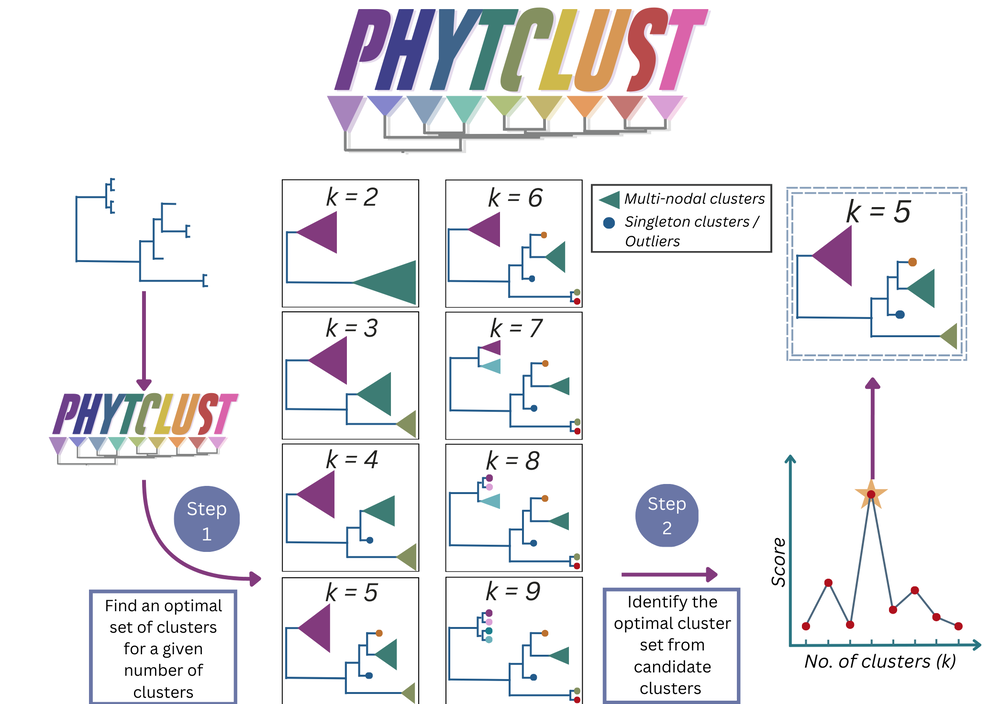
PhytClust is a new computational tool that enables objective, threshold-free grouping of species, genes, or cells based on their evolutionary history.
Although phylogenetic trees are central to studies of evolution, biodiversity, and disease, researchers have lacked a standard way to partition them into meaningful biological groups without arbitrary cut-offs.PhytClust provides an exact and scalable solution by optimising cluster structure directly on phylogenetic trees using branch lengths, while efficiently handling trees with more than 100,000 taxa. We demonstrate its broad applicability across diverse contexts, including single-cell cancer evolution, avian and archaeal taxonomy, gene family diversification, and conservation-oriented species selection.
By enabling consistent and reproducible clustering of evolutionary trees, PhytClust offers a new standard framework for phylogenetic analysis across ecology, evolution, and genomics. PhytClust is available for use on GitHub.
September 17, 2025
CNSistent integration and feature extraction from somatic copy number profiles - published in GigaScience
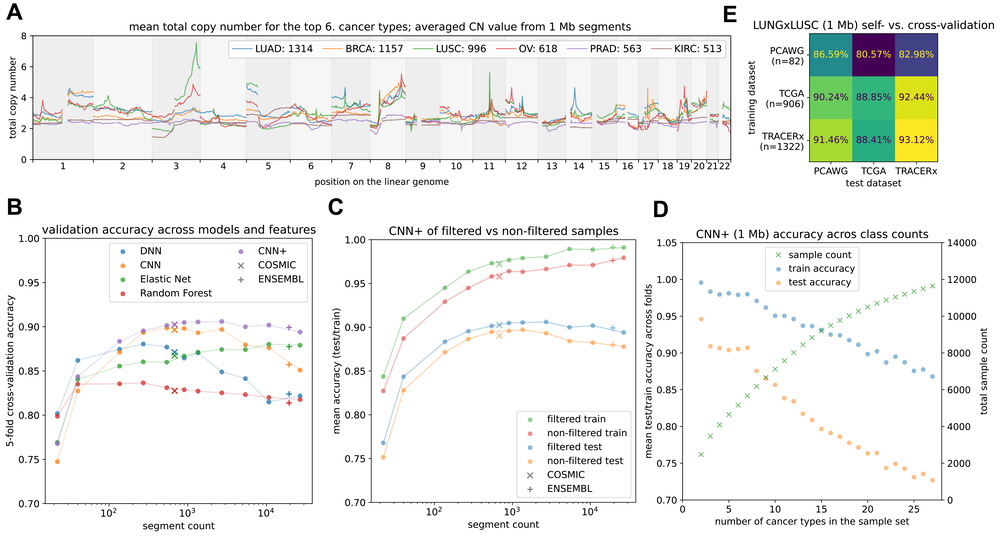
CNSistent – a tool for imputation, filtering, consistent segmentation, feature extraction, and visualization of cancer copy number profiles – has been published in GigaScience.
CNSistent provides fast, parallelized tools that accelerate work with copy number segment files. We have processed 14,174 cancer profiles, creating a uniform dataset available to other researchers.
Based on this dataset, we have developed a state-of-the-art cancer-type classifier from SCNA profiles, using a convolutional neural network architecture.
CNSistent can be obtained from our repository, or via Python PIP. Documentation is available at Read the Docs or in the Towards Data Science post.
March 28, 2025
Maja Cwikla successfully defends her PhD

We proudly announce that Maja has successfully defended her PhD thesis on March 28, 2025 at the Berlin Institute for Molecular Systems Biology, Max Delbrück Center for Molecular Medicine in the Helmholtz Association.
She obtained her PhD from the Humboldt University Berlin for her work on “Co-evolution of genome and transcriptome in neuroblastoma”. During her time in our lab Maja explored effects of extrachromosomal DNA (ecDNA) and its consequences on gene expression which resulted in a Cell Reports publication.
We are glad that Maja stays in the lab for a Post-Doc to continue her work on single-cell data from neuroblastoma!
January 21, 2025
Oncogene paper on DNA methylation heterogeneity and epipolymorphism in kidney cancer

Recently, our insights in the (epi-)genetic heterogeneity of clear cell renal cell carcinoma were published in Oncogene. Together with our partners Sabrina Rossi and Charlie Massie from Cancer Research UK Cambridge Centre we characterized 136 multi-region tumors and normal tissue from 18 ccRCC patients.
Our study revealed a differential epipolymorphism between ccRCC and normal kidney tissue. In addition we found an impact of differential epipolymorphism in gene promoters being an independent predictor of associated gene expression.
Using the cell-type specific patterns of DNA methylation to deconvolute the data we could identify a latent methylation component likely representing tumor infiltrating T-cells. Levels of this component were higher in tumours with positive predictive parameters.
October 21, 2024
iScience paper on the impact of copy-number dosage on telomere maintenance in neuroblastoma

We are delighted that our project on the regulation of telomere maintenance by allele-specific copy number dosage in neuroblastoma has been published in iScience
Combined analysis of WGS and RNA-seq data of neuroblastoma patients revealed gene dosage induced gene expression changes with impact on alternative lengthening of telomeres. In addition to ATRX deficiency, we found copy-number induced upregulation of TERT and histone variant genes H3F3B, H3F3C, and H2AFJ.
Our data suggest a complex interaction between genetic, epigenetic, and transcriptomic effects that shape the regulation of disease-associated pathways in neuroblastoma by altered telomere lengthening.
September 12, 2024
ecDNA paper published in Cell Reports

In this collaborative project with Anton Henssen and Kerstin Haase from the Charite Berlin we analyze the role of extrachromosomal DNA (ecDNA) copy number heterogeneity in neuroblastoma.
By using DNA and RNA sequencing from the same single cells in cell lines and neuroblastoma patients we compare intercellular ecDNA copy-number heterogeneity with that obtained from linear genomic amplifications. We show how ecDNA driven oncogene amplifications influence gene expression and the overall transcriptional cell state.
Our results highlight the importance of ecDNA copy-number alterations in neuroblastoma and emphasize the need to develop ecDNA-specific treatment strategies.
July 15, 2024
New Cologne offices at the TRIO building

At the beginning of April, the Schwarzlab moved to the ground floor of the new TRIO building on the campus of the University Hospital Cologne. The TRIO building provides modern offices and an inspiring atmosphere for research. We are looking forward to lots of new opportunities for collaboration with our colleagues from oncology and immunology! From now on, our new street and mail address for the ICCB is:
Institute for Computational Cancer Biology
Gebäude 66 (TRIO)
Robert-Koch-Straße 21
50931 Cologne
Germany
July 05, 2024
Symposium "Artificial Intelligence for Human Cancer Medicine"


The Schwarz and Lehmann Labs highlighted their work and the role of AI in cancer research at the symposium ”Artificial Intelligence for Human Cancer Medicine" with Minister-President Hendrik Wüst MdL and NRW Minister of Science Ina Brandes.
Together with scientists from the Cancer Research Center Cologne Essen (CCCE) Brandes discussed how the NRW AI strategy could improve cancer patient care.
For more information see the news link of University Hospital Essen (German only): Symposium „Künstliche Intelligenz für eine menschliche Krebsmedizin“
April 25, 2024
Model for transcription-based lung cancer risk prediction published in Genome Medicine

We are glad to announce that our computational model to assess lung cancer risk from non-invasive nasal swabs of healthy volunteers and lung cancer patients was published in Genome Medicine.
By using a transcriptional network approach we were able to demonstrate a causal relationship of de-regulated immune-pathway expression and lung cancer risk.
Our lung cancer risk classifier based on transcriptomic data derived from nasal swabs provides initial evidence for germline-mediated personalized smoke injury response and risk in the general population, with potential implications for managing long-term lung cancer incidence and mortality.
April 2, 2024
News & Views in Nature Genetics
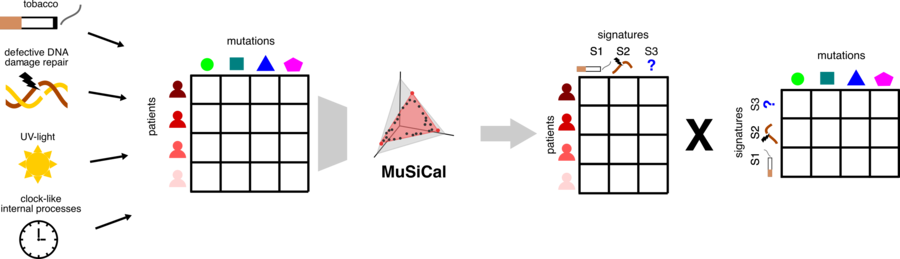
Roland and Tom were invited to give their views on the Nature Genetics paper of Jin et al. presenting MuSiCal, a set of novel algorithms for improved identification of cancer mutational processes by mutational signatures.
November 9, 2023
MOP-C paper published in Blood

As part of a multidisciplinary team led by the Borchmann Lab the Schwarzlab implemented a publicly available shiny application for MOP-C (Molecular prognostic index for central nervous system lymphomas).
MOP-C provides risk assessment for central nervous system lymphomas based on clinical risk factors, radiographic response and peripheral residual disease measured by circulating tumor DNA (Heger et al. 2023, Blood).
By integrating these clinical and molecular features MOP-C was proven to be highly predictive of outcomes a CNSL cohort with a failure-free survival hazard ratio (HR) per risk group of 6.60.
October 23, 2023
Refphase paper published in PLOS Computational Biology
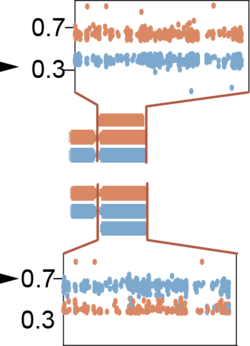
We are excited that after 9 years of development, our multi-region copy-number phasing algorithm Refphase is finally here!
Refphase uses WES or WGS data from multiple samples from the same patients to identify the haplotypes of origin of somatic copy-number alterations (SCNAs). Refphase has led to the discovery of the Mirrored Subclonal Allelic Imbalance (MSAI) phenomenon in cancer (Jamal-Hanjani et al. 2017, Nature), where SCNAs affect opposite haplotypes in the same tumour, leading to a "mirrored" B-allele frequency pattern.
Refphase was further key to demonstrating widespread MSAI occurrences and continuous parallel evolution across human cancers (Watkins et al. 2020, Nature).
Refphase is implemented in R and available on GitHub at https://github.com/ICCB-Cologne/refphase.
May 18, 2023
Marina Petkovic successfully defends her PhD
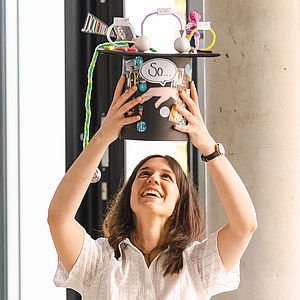
We are thrilled to report the third successful PhD defense in the Schwarzlab: Marina Petkovic defended her PhD on May 12, 2023 at the Berlin Institute for Molecular Systems Biology, Max Delbrück Center for Molecular Medicine in the Helmholtz Association.
Her PhD thesis is titled "Reconstructing the evolutionary history of cancer from allele-specific copynumber profiles" and she will receive her PhD from the Humboldt University Berlin.
During her PhD she contributed in a major way to the development of MEDICC2 and conducted large scale analyses on the order of evolutionary copy-number events in cancer.
After an interim postdoc at Charite Berlin, Marina is now moving to greener pastures in industry where she will continue to work in bioinformatics.
May 7, 2023
Our team is growing!
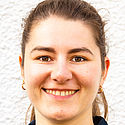

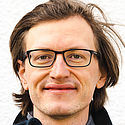
The Schwarzlab is welcoming two new PhD students at our site in Cologne at the ICCB and one postdoc at BIFOLD Berlin!
Claudia Robens is a biotechnologist who did her undergrad and Masters in Heidelberg. She will be investigating chromatin architecture in cancer in a collaboration with Ana Pombo from Berlin and as part of the DFG priority program SPP2202.
Katyayni Ganesan is a biologist turned bioinformatician with a Bachelors from the University of Nottingham and a Masters from LMU Munich. She will be investigating single-cell heterogeneity and fitness effects in cancer as part of the SATURN3 consortium.
Nathan Lee is a new postdoctoral fellow at BIFOLD Berlin and a mathematician from the University of Washington. He will be investigating theoretical models of cancer evolution and algorithms for phasing structural variants in single cells.
February 24, 2023
SMITH paper published in Bioinformatics
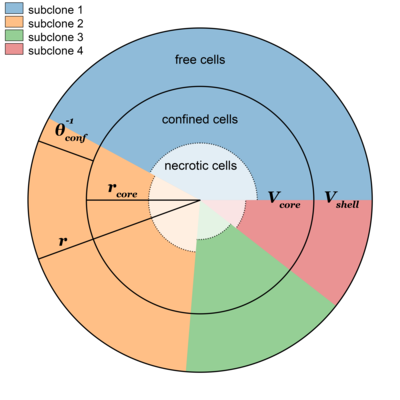
We are thrilled to anounce the release of the SMITH software toolkit for simulating cancer evolution with spatial constraints and the accompanying paper in Bioinformatics.
SMITH is a novel tool and algorithm for simulating cancer evolution including random mutations with varying fitness effects. SMITH is based on the classic branching model of cancer which it extends with local and global "confinement", new mechanisms which simulates spatial constraints by limiting clonal growth based on the size of clones and the overall tumour.
SMITH is implemented in C# and available on GitHub at https://github.com/ICCB-Cologne/SMITH.
It's accompanying visualisation package pyFish is implemented in Python and available at https://github.com/ICCB-Cologne/PyFish.
January 31, 2023
Stella de Biase successfully defends her PhD
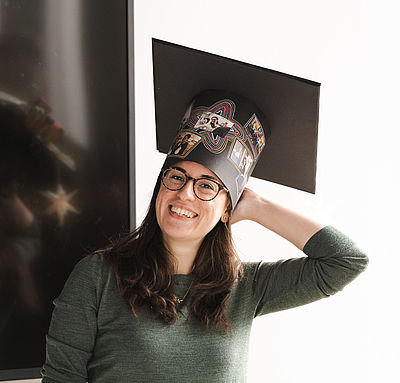
With flying colors Stella de Biase defended her PhD on January 10, 2023 at the Berlin Institute for Molecular Systems Biology, Max Delbrück Center for Molecular Medicine in the Helmholtz Association.
Her PhD thesis is titled "Exploring the contribution of genetic and environmental factors to cancer risk and development" and she will receive her PhD from the Humboldt University Berlin.
After her Masters degree in Medical Biotechnologies at the Federico II University of Naples, Italy, Stella joined our lab in January 2017 on a MDC NYU PhD Fellowship. Some highlights of her work include the early detection of lung cancer, the effect of SSR mutations on growth rates in yeast, and how smoking affects the expression of SARS-CoV-2 entry genes.
Go Stella! Thanks for all your hard work and kind words. You rock!
November 14, 2022
MEDICC2 manuscript published in Genome Biology!
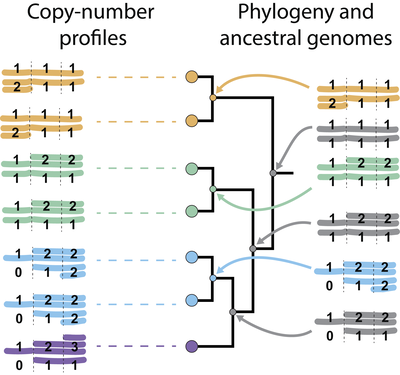
Eight years after its intial release we are more than proud to announce that the MEDICC2 algorithm and paper for inferring cancer evolution from somatic copy-number alterations is now published online at Genome Biology.
MEDICC2 is the leading algorithm for phylogenetic reconstruction from and quantification of chromosomal instability. It is based on an efficient finite-state transducer framework which, together with integrated parallelisations, allows accurate phylogentic inference even for single-cell data with thousands of cells.
MEDICC2 not only outperforms the original implementation in speed by orders of magnitude, but also, as the first and only algorithm in the field, allows the accurate detection of clonal and subclonal whole-genome doubling events.
November 9, 2022
Welcome to our new lab members!




The Schwarzlab is welcoming several new members to our group at our site in Cologne at the ICCB!
Daniel Schütte is a clinician scientist who is interested in molecular biomarkers and cancer early detection and prevention and already joined some months ago.
Felix Schifferdecker and Selina Wächter are two MD students who will be writing their dissertation in the lab in parallel to their MD coursework and clinical pratice over the next years. Felix will be working on simulating chromosomal aberrations in cancer evolution and Selina will be investigating methods for detecting selection in cancer phylogenies.
Finally, we would like to welcome Teodora Bucaciuc, who has joined the lab as a research associate, developing pipelines for copy-number analysis and investigating the co-evolution of genomic and epignomic alterations in cancer. Welcome all, great to have you on board!
October 25, 2022
Multiple job openings in the Schwarzlab
The Schwarzlab at the ICCB has multiple job openings for PhD students, Postdoctoral Fellows and a Scientific Programmer in multiple national and international projects working on chromosomal instability, copy-number evolution and algorithms for tumour heterogeneity.
October 21, 2022
Julia Markowski successfully defends her PhD
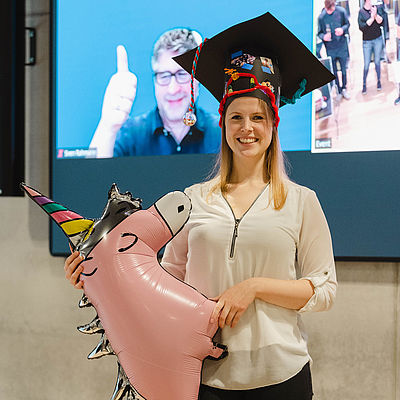
We are incredibly thrilled that Julia Markowski successfully defended her PhD on October 21, 2022 at the Berlin Institute for Molecular Systems Biology, Max Delbrück Center for Molecular Medicine in the Helmholtz Association.
Her PhD thesis is titled "Inferring haplotype-specific chromatin conformation using Genome Architecture Mapping" and she will receive her PhD from the Humboldt University Berlin in the near future.
After completing her Masters degree in Bioinformatics at the Max-Planck-Institute for Molecular Genetics and the University of Potsdam, Julia joined our lab in May 2017 on a MDC PhD Fellowship. She was subsequently supported by the DFG priority programme SPP2202 "Chromatin Architecture in Health and Disease".
She is now moving to Boston as a postdoctoral fellow in the Park Lab at Harvard Medical School and we wish her all the best for the future!
September 20, 2022
The Lehmann Lab joins the ICCB
We are glad that the Lehmann Lab has joined the ICCB as an associated group.
The Lehmann Lab is interested in the development of approaches that support the molecular characterisation of patient cohorts and in approaches for data integration to gain insights into disease mechanisms. Welcome on board!
September 14, 2022
The ICCB website launches
We are happy to announce the launch of this new ICCB website. The fantastic team at frommo visuelle medien put this together in a record time including custom design and elements. We could not be more thrilled!
Thanks to everyone who contributed design, content and code!