Mission and Goals
Data science and AI for cancer research
The Institute for Computational Cancer Biology (ICCB) at the University Hospital Cologne was founded in 2022 to advance cancer research through computational methods and to train and educate the next generation of computational cancer scientists.
We are part of the Cancer Research Center Cologne Essen (CCCE) funded by the Ministry of Culture and Science of the State of North Rhine-Westphalia.
Our mission is to develop bespoke statistical methods, machine learning approaches, algorithms and models to decipher tumour heterogeneity and cancer evolution and improve our understanding of the wealth of genomic, transcriptomic, epigenomic and imaging data collected in cancer research.
Want to know more?
| ▶ News | ▶ Work with us |
About us
Events
September 21, 2026 - 4pm, TRIO Building 66 Ground Floor
ICCB Seminar Series on Computational Cancer Biology - Peter Van Loo, PhD
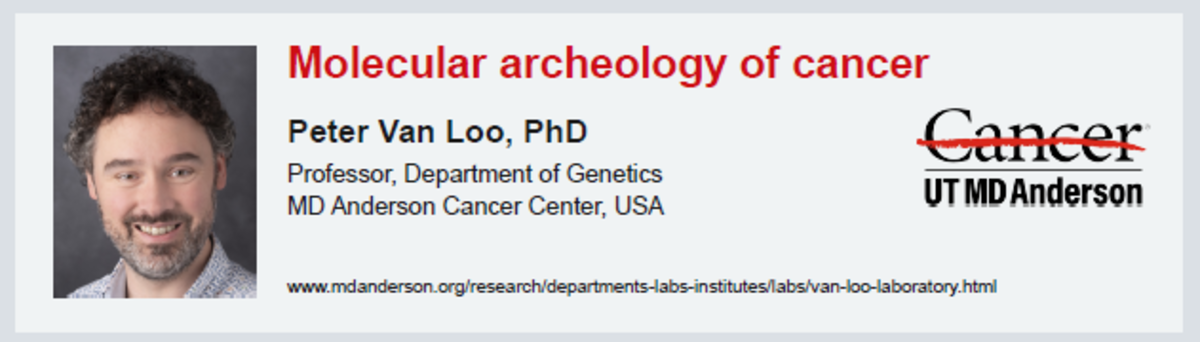
Peter will talk about the Molecular archeology of cancer
Abstract
The cancer genome carries an archeological record of the tumor’s past. Over the past years, we have developed several approaches to mine that archeological record, which we collectively call 'molecular archeology of cancer'. Using these approaches, we are able to infer the subclonal architecture and evolutionary history of tumors. We applied these approaches in a largescale pancancer setting, showing that intratumor heterogeneity is pervasive across cancers and that the timelines of tumor evolution span multiple years to decades. Key driver events in tumor evolution typically occur early, and copy number gains often accumulate as punctuated bursts, commonly after genome doubling. Late genome doubling is frequent in cancer evolution and is typically followed by an increase in chromosomal instability. Our approaches increase the evolutionary information that can be obtained from tumor genome sequences and, therefore, improve our understanding of the developmental history of cancer.
About the speaker
Peter Van Loo is a Professor and CPRIT s holar at the University of Texas MD Anderson Cancer Center, Department of Genetics, with a joint appointment at the Department of Genomic Medicine. During his postdoc, Peter developed computational techniques to study copynumber alterations in cancer genomes and the evolutionary history and subclonal architecture of tumors. As an independent researcher, at the Francis Crick Institute in London, and later as a professor at the University of Texas MD Anderson Cancer Center, he has sketched the typical evolutionary trajectories of many cancer types, allowing insight into the timelines of cancer development and into how tumors metastasize.
Contact: Laura Godfrey (+49 221 478 51455, laura.godfrey@iccb-cologne.org), Stefanie Fleer (+49 221 478 15104, stefanie.fleer@iccb-cologne.org)
About us
News
August 12, 2026
Our Python framework for cell-free DNA fragmentomics pyfraglib is now available on bioRxiv
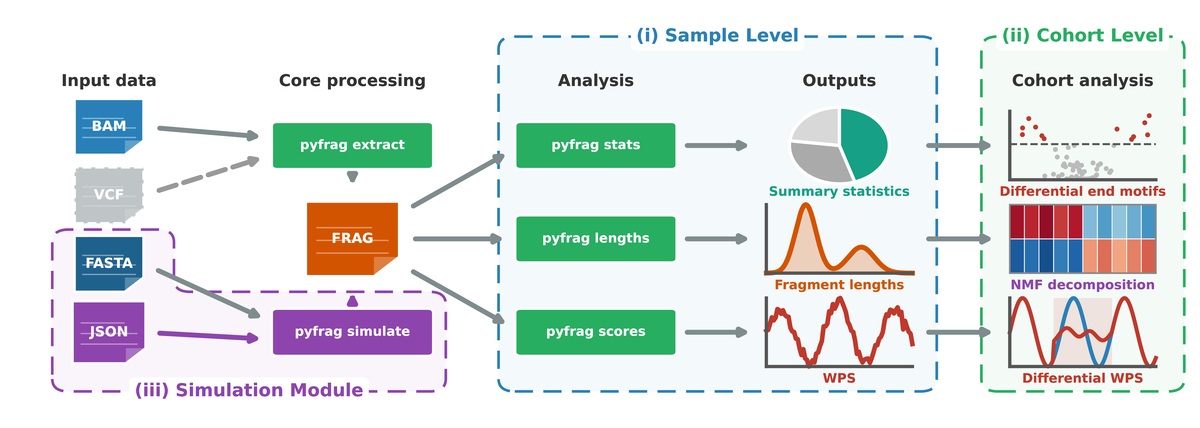
pyfraglib provides an integrated framework for systematic extraction and analysis of cfDNA fragmentomic features, including fragment size distributions, end-motif profiles, genomic fragmentation patterns, and cohort-level statistical analyses, alongside an in silico fragment simulation module.
By combining these capabilities within a single, modular and reproducible framework, pyfraglib facilitates standardized cfDNA fragmentomics workflows and supports method development, benchmarking, and biological investigation across diverse datasets.
pyfraglib´s available for use on GitHub.
June 19, 2026
Successful Summer Retreat in Jünkerath

This year's summer lab retreat brought us again to the beautiful Glaadter Hütte in Jünkerath.
We used the inspiring atmosphere of the Eifel to continue our successful hackathon event from last winter, developing new innovative ideas, prototyping new computational tools, and tackling challenging scientific questions.
Beyond the coding and grant writing sessions, there was plenty of time for scientific discussions, networking, and some outdoor group activities.
Sponsors and Partners


Funder
University Hospital and University of Cologne

Funder
Cancer Research Center Cologne Essen (CCCE)
funded by the Ministry of Culture and Science of the State of North Rhine-Westphalia.


Strategic partner
Berlin Institute for the Foundations of Learning and Data (BIFOLD)
funded by the German Ministry of Research, Technology and Space (BMFTR).